

EU Packaging “Reset” through the Packaging and Packaging Waste Regulation: What Malaysian Exporters Need to Know Now
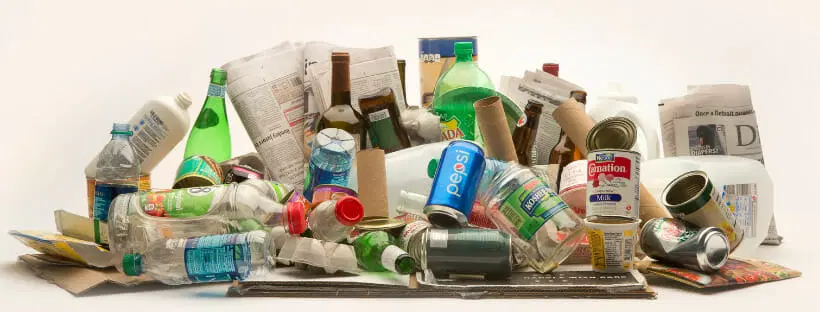
EU Packaging “Reset” through the Packaging and Packaging Waste Regulation: What Malaysian Exporters Need to Know Now
The European Union has fundamentally overhauled its packaging regime through Regulation (EU) 2025/40 on Packaging and Packaging Waste (PPWR). This is not a routine update. It replaces the long-standing Packaging Directive and introduces a single, directly applicable EU rulebook governing how packaging must be designed, manufactured, labelled, documented, and ultimately recycled or reused across all EU Member States.
The Regulation entered into force on 11 February 2025 and will generally apply from 12 August 2026. While the obligations formally bind EU “producers” and importers, the commercial reality is straightforward: if your packaging does not meet EU requirements, your product cannot be placed on the EU market. In practical terms, that means EU distributors and brand owners will require upstream compliance from their non-EU suppliers – including Malaysian exporters.
This is not a distant policy discussion. EU buyers are already reviewing packaging specifications, tightening procurement standards, and mapping supply chains in preparation for the 2026 application date. Exporters who cannot demonstrate compliant packaging design, recyclability, and documentation risk delayed shipments, rejected tenders, contract renegotiations, or replacement by alternative suppliers.
This write-up sets out what Malaysian exporters should anticipate under the new regime – including recyclability standards, recycled content thresholds, reuse expectations, documentation requirements and format restrictions – and identifies the practical steps businesses should begin taking now to safeguard continued access to the EU market.
Why this matters to Malaysian exporters
The PPWR is built around a simple commercial expectation: if your product is on an EU shelf, your packaging must be proven recyclable, increasingly reusable in some sectors and backed by documentation.
The PPWR applies broadly to all packaging and packaging waste, regardless of where it was produced. So even if the legal obligations often sit with an EU “producer/importer,” you as an exporter will be asked to supply the compliant packaging and the evidence pack. This principle isn't new; we know it from other sustainability-related laws, such as the EUDR.
What the PPWR Changes in Practical Terms
The PPWR does not simply update recycling targets. It restructures how packaging is designed, justified, documented and circulated in the EU. For exporters, the impact will depend on material type, sector and distribution model – but five areas are consistently relevant.
Impact 1: recyclability becomes a design requirement
Under the new regime, all packaging placed on the EU market must be recyclable. This is not a marketing concept; it is a technical standard. Packaging must be designed for material recycling and, in later phases, must also be recyclable “at scale” within the EU waste management system.
This shifts recyclability upstream into product design. Multi-layer composites, difficult-to-separate materials and certain combinations of plastics may come under scrutiny depending on recyclability performance criteria and future implementing measures.
Commercial implication for Malaysian exporters
EU buyers are expected to review packaging structures and request evidence that materials are compatible with established EU collection, sorting and recycling streams. Exporters using complex laminates, metallised films or mixed-material packaging should anticipate technical queries and potential redesign discussions.
Impact 2: minimum recycled content in plastic packaging
The PPWR introduces mandatory minimum recycled content requirements for plastic packaging (subject to category and future implementing acts). Recycled content will not be a voluntary ESG preference – it will become a regulatory condition for certain packaging formats.
The Regulation also establishes a framework for verifying recycled content, including calculation methodologies and documentary substantiation.
Commercial implication for Malaysian exporters
Exporters using plastic packaging should expect buyers to request:
- Evidence of recycled resin sourcing
- Supplier declarations
- Traceability documentation
- Confirmation of compliance with EU calculation methodologies
As a Malaysian exporter, you must be prepared to have a much closer connection or even integration with your resin suppliers and converters as they are ultimately the ones who can ensure reliable data flows.
Impact 3: Packaging minimisation is no longer aesthetic – it is regulated
The PPWR requires packaging weight and volume to be reduced to the minimum necessary to ensure functionality. Over-packaging and unnecessary empty space will be restricted. For grouped, transport and e-commerce packaging, empty space limits will apply from 2030.
The Regulation also addresses packaging features that artificially increase perceived volume.
Commercial implication for Malaysian exporters
Exporters shipping into EU retail or e-commerce channels should assess:
- Secondary and tertiary packaging dimensions
- Void fill practices
- Marketing-driven packaging enhancements
In some sectors, logistics optimisation and packaging redesign may become intertwined exercises.
Impact 4: reuse and refill targets
The Regulation introduces reuse targets in specific sectors, particularly in transport packaging and certain distribution formats. While much of the operational burden will sit with EU operators, supply chains will inevitably adjust.
Commercial implication for Malaysian exporters
B2B exporters using pallets, crates, bulk containers or protective transport packaging may encounter requests to:
- Participate in reuse systems
- Shift to standardised reusable formats
- Align with EU pooling arrangements
This is particularly relevant for exporters of consumer goods, electronics, automotive components and FMCG products. In practice, such exporters should also expect their customers to push down the operational burden to them, at least to some extent.
Impact 5: certain packaging formats will be prohibited altogether from 2030
From 1 January 2030, specific packaging formats listed in Annex V of the Regulation will be prohibited. These include certain single-use plastic applications and particular hospitality-related packaging formats.
The scope and sectoral impact will vary.
Commercial implication for Malaysian exporters
Exporters supplying:
- Hospitality products
- Food service packaging
- Pre-packed produce
- Single-use consumer packaging
should conduct an early exposure assessment. Some formats may remain permissible with adjustments; others may require substitution strategies.
Impact 6: documentation and conformity assessment
The PPWR formalises conformity assessment obligations and requires technical documentation and an EU Declaration of Conformity. While the formal legal obligation typically attaches to EU-based economic operators, compliance will be supply-chain driven.
In practice, EU importers will require upstream documentation from non-EU suppliers in order to discharge their own regulatory obligations, thus affecting all Malaysian EU-exporters.
Commercial implication for Malaysian exporters
Exporters should anticipate requests for structured documentation packages, including:
- Packaging material breakdown
- Recyclability justification
- Recycled content substantiation
- Chemical compliance declarations (where applicable)
- Labelling compliance readiness
Packaging compliance is moving closer to the model seen in product safety regulation – documented, auditable and traceable.
Impact 7: PFAS restrictions in food-contact packaging
From 12 August 2026, food-contact packaging must not be placed on the EU market if it contains PFAS above specified thresholds (subject to alignment with other EU chemicals legislation).
This is particularly relevant for grease-resistant papers, barrier coatings and certain treated materials.
Commercial implication for Malaysian exporters
Exporters of packaged food, beverages and food-contact materials should initiate supplier-level chemical due diligence and obtain written confirmations where appropriate.
Immediate Priorities for Exporters Maintaining EU Market Access
Malaysian exporters will ideally already have begun their preparation and should in any event start well before 12 August 2026 in order to ensure that they remain export-ready. The following steps are commercially prudent:
Step 1: conduct a packaging portfolio audit
You cannot act unless you fully understand how you are currently exporting to the EU. Understanding this is key. Map all packaging formats used for EU-bound products, including primary, secondary and transport packaging.
Step 2: identify high-risk categories
You need to start somewhere and you will likely face an uphill battle if you attempt to change everything at once. We therefore recommend that you prioritise the review of:
- Plastic-heavy packaging
- Multi-layer composites
- Hospitality-related formats
- E-commerce shipping configurations
- Food-contact materials
Reviewing such high-risk categories allows you to address them early on and thus remaining export-ready.
Step 3: engage your EU buyers early
At large, you have two choices: you can (a) sit back and wait until your customers from the EU tell you that you must now comply or they'll stop purchasing; or (b) proactively address this. Needless to say, proactively addressing this is the better approach because it allows you to remain in control.
You must clarify with your EU customers on at least the following points:
- Recyclability grading expectations
- Recycled content thresholds
- Documentation format requirements
- Transition timelines
Step 4: secure upstream documentation
Steps 1-3 are only useful if you can actually provide the documentation that EU buyers will require from you. This requires you to work closely with your own suppliers. You should obtain:
- Supplier declarations
- Material specifications
- Recycled resin traceability evidence
- Chemical compliance confirmations
Keep in mind that your suppliers may not have such documentation readily available – simply because they have never been requested to provide it.
Step 5: build a packaging compliance file per product line
Exporters should develop a structured Packaging Compliance File for each EU-bound product line. This should not be a loose collection of supplier emails, but a consolidated and internally controlled documentation set that can be produced quickly if requested by EU buyers, customs authorities, or market surveillance bodies.
This should include
- the Full packaging bill of materials (BOM)
- material specifications and supplier declarations so that you can confirm composition, recycled content (where applicable) and conformity with relevant EU requirements
- recyclability assessment rationale tailored to EU-requirements
- recycled content substantiation
- food-contact compliance documentation (if you are in that industry)
- Labelling readiness documentation to ensure packaging markings and environmental claims are in order
- internal sign-off records demonstrating that compliance has been reviewed and approved at management level.
Having a packaging compliance file per product line enables you to provide rapid and confident responses to EU buyer audits and technical questionnaires. Further, it will reduce operational disruption if regulators conduct post-market checks or if buyers update procurement standards with short lead times.
Strategic Considerations
The PPWR reflects a broader regulatory direction within the EU: sustainability requirements are being embedded directly into product market access conditions. Packaging is no longer treated as an ancillary logistical component – it is a regulated product attribute.
Exporters that integrate packaging compliance into product development, procurement and supplier management now will preserve continuity of EU sales and strengthen their position in procurement discussions.
Those who defer preparation may find that compliance becomes reactive – driven by customer ultimata rather than strategic planning.
Preparing for 2026
The transition period before August 2026 presents a critical planning window. Exporters that assess packaging exposure now will be better positioned to maintain uninterrupted EU market access. Those who fail to act may soon find themselves unable to export to the EU altogether.
We advise Malaysian exporters on regulatory mapping, supply-chain documentation strategy and risk mitigation under the PPWR. We also review contracts for the supply of goods with foreign buyers and can provide guidance on the implication of PPWR and other sustainability-related clauses for your business in practice. Should you require a tailored assessment of your packaging portfolio, our team would be pleased to assist.
.png)


.svg)